
Key takeaways
- It takes 10–15 exposures before a child accepts a new vegetable — keep offering, stop pushing
- Raw and crunchy often wins over cooked and soft
- Put vegetables in what they already love — dosa, paratha, idli batter
- No phone at the table, no bribes, no forcing; 20 minutes and the plate goes
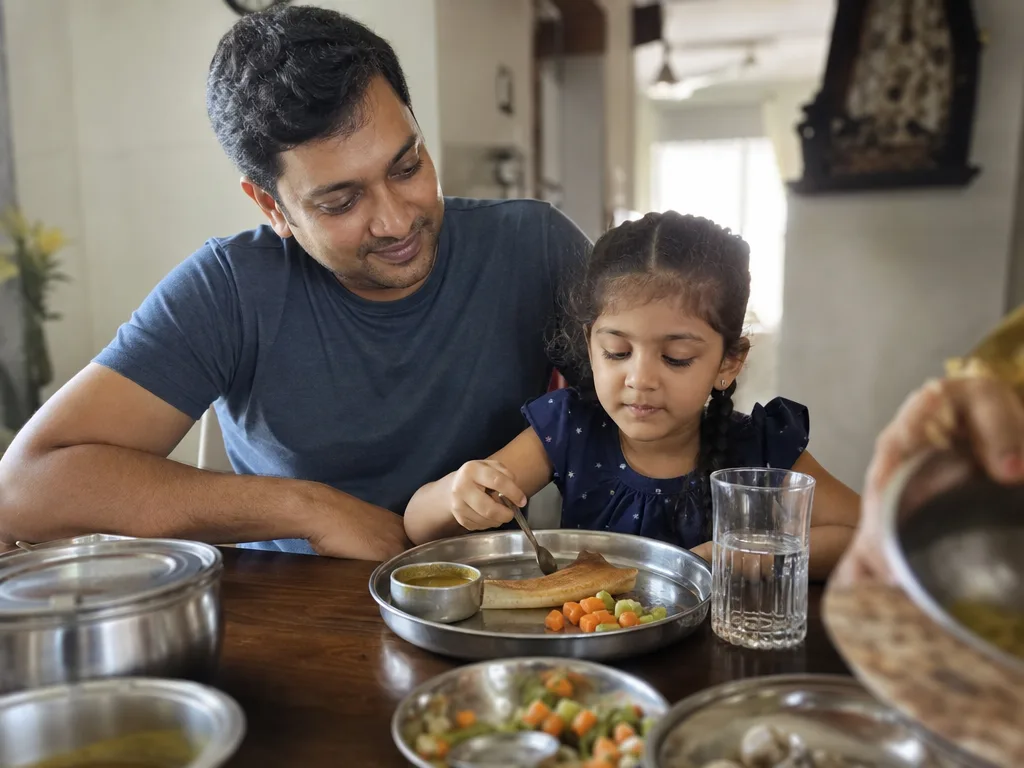
"He'll eat only dal-chawal." "She picks out every piece of beans." "We've tried everything, now we just give him what he wants so he eats something." If that's your house, you're in a very large club. Roughly one in three Indian children between 2 and 6 goes through a proper fussy phase, and vegetables are almost always the first casualty.
The good news: most of it is a normal, temporary stage called food neophobia — a built-in suspicion of new foods that peaks at 2–3 and fades by 6–7 if it isn't turned into a daily battle. Here's how to get through it without the battle.
Why do toddlers refuse vegetables in the first place?
- Bitterness. Children have more taste buds than adults and are wired to reject bitter — which is what karela, methi, palak and even cabbage taste like to them.
- Texture. A soft, mushy sabzi is more suspicious to a 3-year-old than a crunchy carrot stick. Texture, not taste, is often the real objection.
- Control. At 2–4, refusing food is one of the few places a child can say no and win. The more you push, the more valuable the "no" becomes.
- Habit. If dinner is regularly rescued with a biscuit or Maggi, the child learns that holding out works.
None of this means your child will never eat sabzi. It means the strategy has to be patience and repetition, not persuasion.
The 9 things that worked
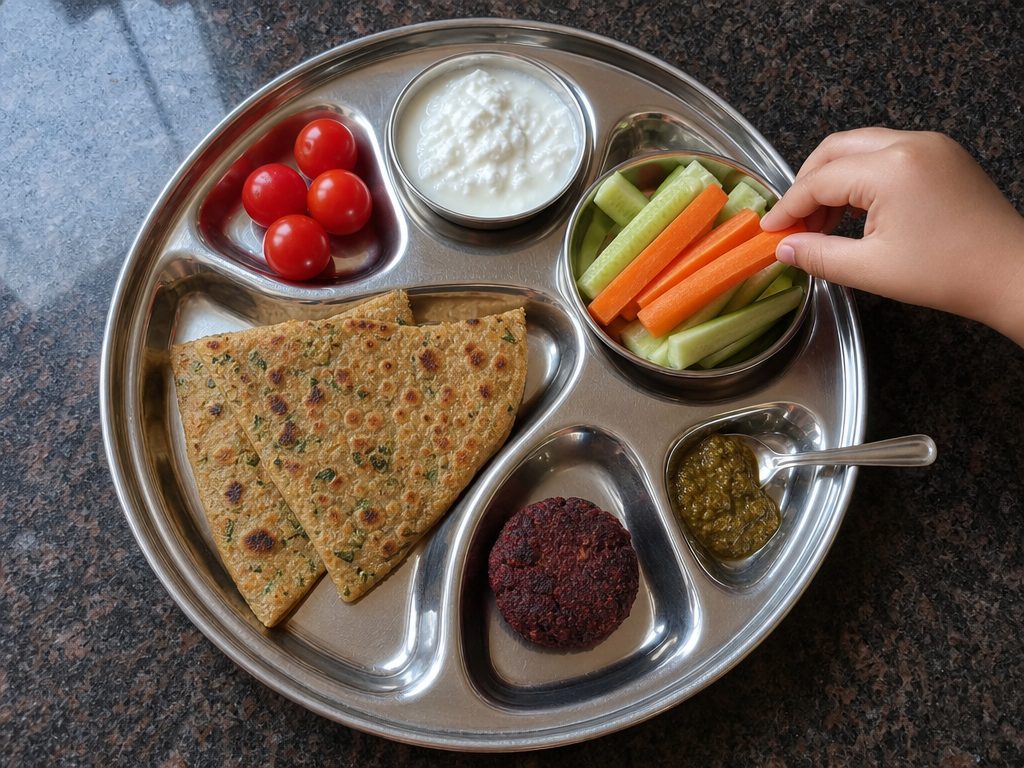
- 1. The one-bite rule. One small bite of the vegetable on the plate, every day, no discussion. Not the whole katori — one bite. Research consistently shows a new food needs 10–15 tries before it's accepted. Most of us give up after three.
- 2. Serve it raw and crunchy first. Carrot sticks, cucumber, capsicum strips, a few peas straight from the pod, a wedge of raw beetroot. Cold and crunchy beats hot and soft for most fussy eaters. Add a tiny bowl of curd or hummus for dipping.
- 3. Hide it in the batter, not in the sabzi. Grated carrot, beetroot or palak paste into dosa or idli batter. Finely chopped methi or grated lauki into paratha dough. Mashed peas and carrot into the potato cutlet. The vegetable goes in something they already say yes to.
- 4. Let them hold it. A whole baby carrot, a paratha triangle with beetroot rolled inside, a cucumber "boat". Children eat more of what they can pick up with their hands.
- 5. Cook with them once a week. A 4-year-old who has washed the beans, snapped them, and put them in the kadai will taste them. Ownership beats persuasion.
- 6. Serve the vegetable first, when they're hungriest. Carrot sticks arrive at the table five minutes before the roti. Hunger does the work.
- 7. Same vegetable, new shape. A child who refuses carrot in sambar may eat it as a stick, as a "coin", grated on curd rice, or as a carrot halwa (yes, that counts at this stage). Rotate shapes before giving up on a vegetable.
- 8. Eat it yourself, visibly. Grandparents, dad, older cousin — everyone at the table eats the same sabzi without comment. Children copy far more than they obey. This is one place a joint family is an advantage.
- 9. Keep sweets and biscuits out of the rescue plan. If dinner is refused, the meal ends after 20 minutes and the next food is the next scheduled meal or snack — fruit, not biscuits. No drama, no lecture. Two or three evenings of this and the pattern breaks.
Things that quietly make it worse
- Bribes. "Finish the beans and you get a chocolate" teaches that beans are the punishment and chocolate is the prize.
- The phone at the table. A child watching a cartoon isn't tasting anything; they're swallowing. When the phone goes, so does the meal. Keep the table screen-free for everyone, adults included.
- Separate menus. Cooking a plain second dish every night removes any reason to try the first one. Offer one "safe" item on the same plate (rice, roti, curd) alongside the family food instead.
- Big portions. A full katori of palak is overwhelming. One spoon looks doable.
- Comments in front of the child. "She never eats anything green" said to an aunt becomes an identity. Talk about something else at the table.
What about tiffin?
School tiffin is where most vegetables silently come home. One paratha with grated vegetable inside, cut into triangles; carrot or cucumber sticks in a separate section so they don't go soggy; a small piece of fruit. Cold, cut and finger-sized travels far better than a sabzi that has sat in a dabba since 7 am.
A realistic target
Don't aim for "eats all vegetables." Aim for this:
- Week 1: one bite of one vegetable at dinner, every day. That's it. Pick the mildest — carrot or peas.
- Week 2: one raw vegetable on the plate at lunch and dinner, one hidden vegetable in a dosa or paratha.
- Week 3–4: your child accepts two vegetables in at least one form without a fight.
- By 8 weeks: three to four vegetables in the rotation. Some days will still be refused. That's a normal week, not a failure.
If your child is also losing weight, gagging on most textures, or eats fewer than 10–15 foods in total, that goes beyond ordinary fussiness — talk to your paediatrician.
Make the tracking visible
A simple "I tried it" chart on the fridge does more than any lecture. One sticker per new bite, no sticker for a clean plate — the goal is trying, not finishing. Printable reward charts and colouring pages of fruits and vegetables, sorted by age, are in the PrintNPlay Kids library if you'd rather not draw one yourself.
Tonight: one carrot stick, next to the plate, no comment. Tomorrow, the same. That's the whole plan for week one.
Printables mentioned in this article
Want printable activities instead of screens?
19,000+ printable pages for ages 2–8 — tracing, colouring, maths, mazes, flashcards — sorted by age. Print at home, reuse forever.
WhatsApp us your child's age Get 10 free pages