Key takeaways
- Choose one skill per session
- Start with tracing, matching and simple sounds
- Keep practice to 10–15 minutes
- Use free pages before buying a larger library
For most 4 year olds, the best worksheets are short, visual pages that practise one skill at a time: pencil control, letter sounds, counting, matching or colouring. Use one or two pages for 10–15 minutes, talk through the pictures, and stop before your child becomes frustrated.
In India, a 4-year-old may be in nursery, LKG, preschool or learning at home. The label matters less than the skill your child is ready to practise. A useful worksheet should be easy enough to start independently, but include one small challenge that you can explain without turning home learning into extra homework.
Which worksheets are right for a 4 year old?
Choose pages from four areas and rotate them across the week:
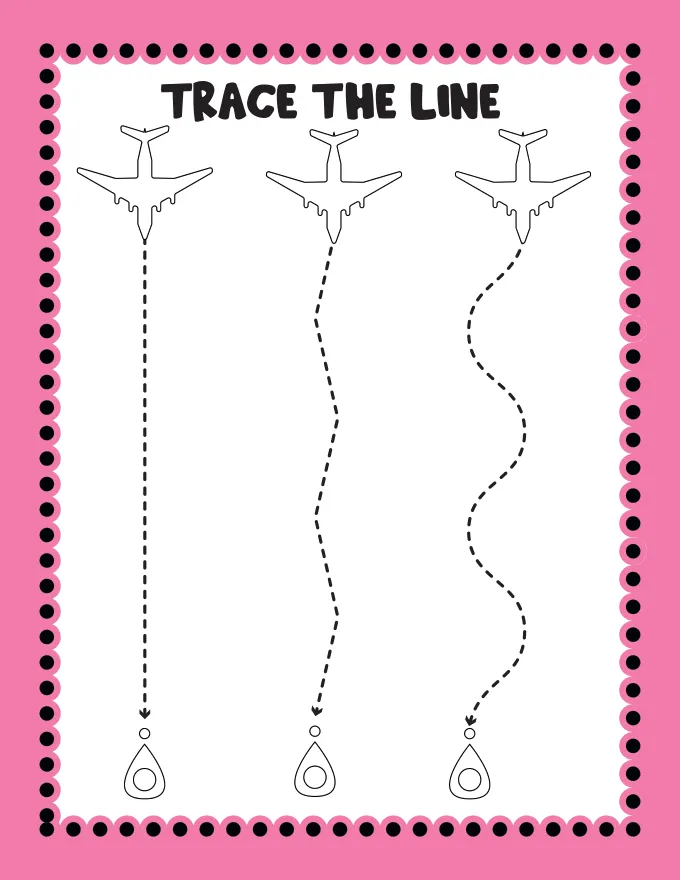
- Pre-writing: straight lines, curves, zigzags, loops and simple shapes. These help a child control a pencil before expecting neat letters.
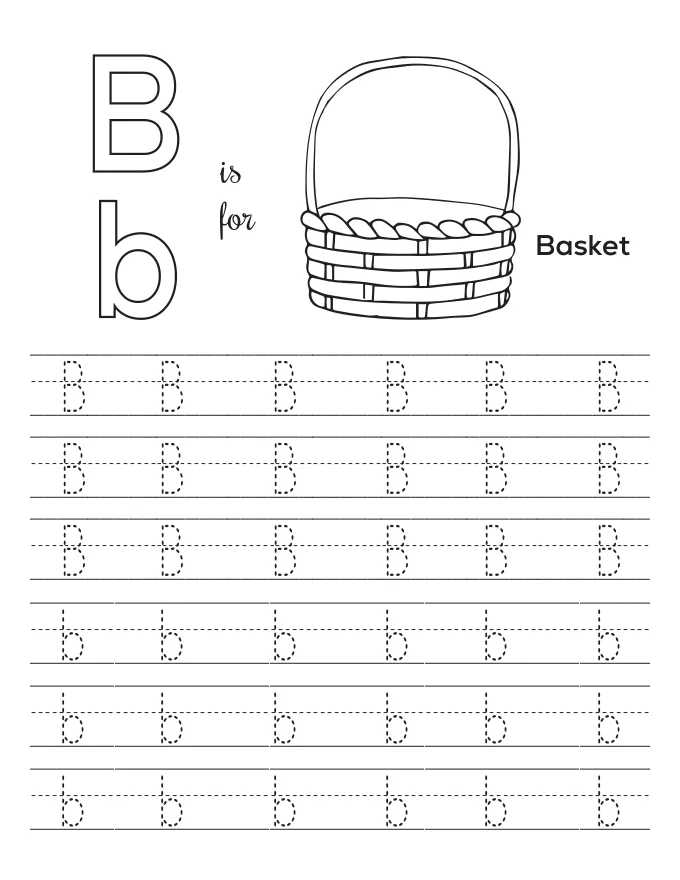
- Early English: matching capital and small letters, beginning sounds, picture-to-letter activities and tracing a few familiar letters.
- Early maths: counting objects, matching quantities, recognising numbers, sorting by colour or size, and completing simple patterns.
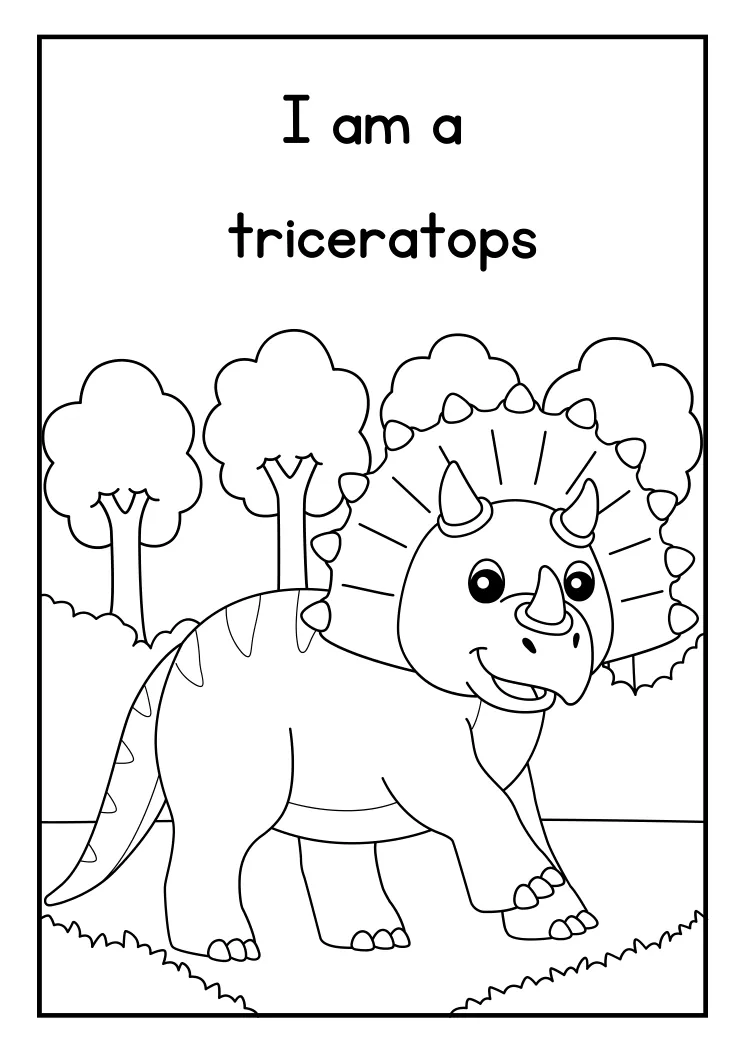
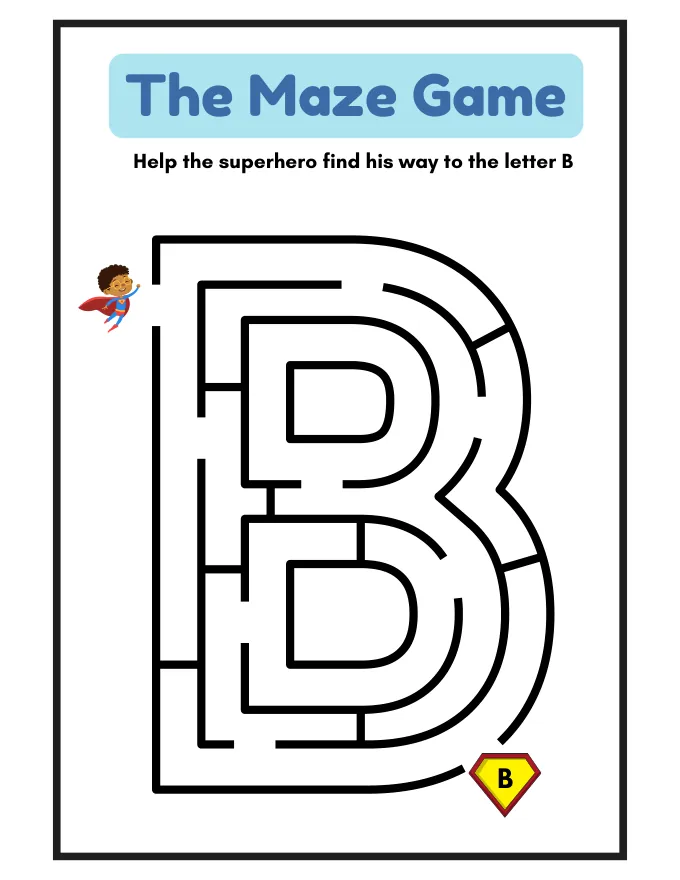
- Fine-motor and creative work: colouring, dot-to-dot, mazes, cut-and-paste with supervision, and picture matching.
Do not print a thick stack just because a child finishes one page quickly. A 4-year-old may be ready for number recognition but still need easier pencil-control pages. Select by skill, not by age label alone.
How should you choose a worksheet before printing it?
Look at the page for three questions:
- Can my child understand what to do from the pictures or one short explanation?
- Is there enough space for a large, developing grip rather than tiny writing?
- Does the page practise one main idea instead of mixing five instructions?
If the answer is no, keep the page for later. A crowded page can make a capable child appear inattentive. For a first session, choose a page with a clear start and finish: trace three lines, circle matching pictures, count five groups or colour one picture.
Also check the printing conditions at home. Black-and-white printing is enough for tracing, numbers and letters. If a page depends on colour, say the colours aloud and let your child use crayons rather than requiring a colour printer. Keep crayons, a pencil, an eraser and a small tray together so starting does not become a negotiation.
What is a simple 15-minute worksheet routine?
A predictable routine makes worksheets calmer. Try this sequence:
- Minutes 1–3: warm up. Let your child draw lines in the air, make big circles with a finger, clap syllables, or count nearby objects.
- Minutes 3–8: one guided page. Sit beside your child for the first example. Say what you are doing, then let the child try the next one.
- Minutes 8–12: one independent page or activity. Offer a matching, colouring, maze or counting page that uses the same skill in a different way.
- Minutes 12–15: talk and finish. Ask the child to show one part they liked. Put the pages in a folder and end with a clear “we are done.”
Some days your child will complete only half a page. That is still useful practice if they were looking carefully, holding the pencil safely and explaining their thinking. Avoid correcting every line. Pick one improvement, such as “start at the dot” or “count each object once,” and leave the rest for another day.
Which activities help pencil control at age 4?
Tracing should move from large movements to smaller controlled marks. Start with vertical and horizontal lines, then curves, waves, loops and simple shapes. Draw a line in the air first and use words such as “down,” “across,” “around” and “stop.” This gives the child a movement to remember instead of only a visual model.
A maze can add purpose to pencil movement: help an animal reach food, or guide a vehicle to a garage. Dot-to-dot pages are useful when the numbers are familiar and the gaps are not too small. Colouring is also practice when the child is encouraged to fill an area slowly, but it does not need to stay inside every boundary.
How can parents introduce letter sounds without pressure?
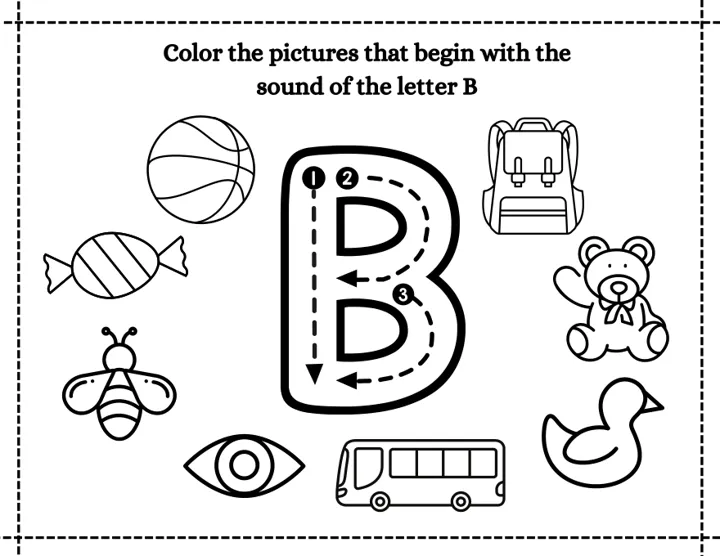
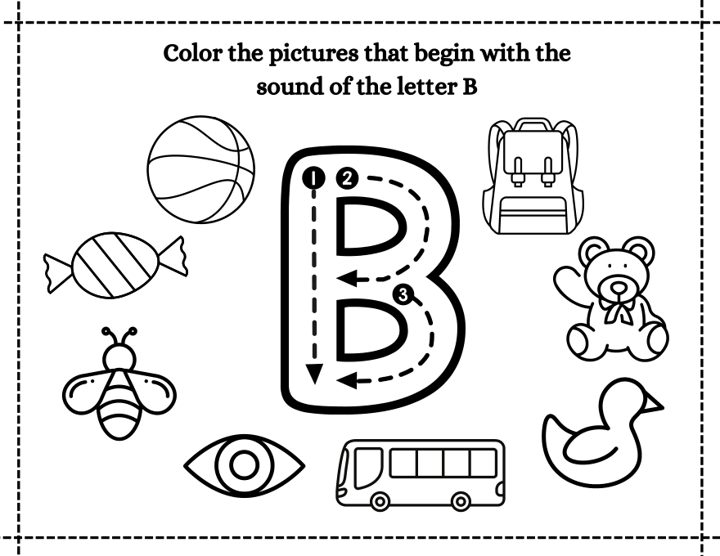
Begin with sounds your child can hear in familiar words. Show a picture of a ball and say the word slowly, then emphasise the first sound without turning it into a test. Ask, “What sound do you hear first?” Accept a spoken answer, a pointing response or a guess followed by another try.
Use three or four pictures at a time. Sort them by beginning sound, match a picture to a letter, or hunt for an object at home that starts with the sound. Keep letter names and sounds connected, but do not insist that a child memorise the whole alphabet before enjoying sound games. If the child is tired, return to picture matching or read a short book together.
How can you practise early maths with worksheets?
Pair every number page with real objects. If the worksheet shows four apples, place four spoons or blocks beside it. Ask the child to touch each object while counting. Then cover one and ask what changed. This connects the marks on paper to quantity.
For a 4-year-old, useful worksheet tasks include:
- counting and circling a group with the requested number;
- matching numerals to groups of objects;
- sorting pictures by size, shape or colour;
- completing an AB pattern, such as red-blue-red-blue;
- finding the one picture that is different.
If counting becomes a guessing game, slow down and move one object at a time. Accuracy and understanding are more important than reaching a larger number quickly.
Should you use free worksheets or buy a complete pack?
Start with the free printable pages and observe which activities your child actually uses. Free pages are enough to test whether your child enjoys tracing, matching, colouring or number practice.
If you want one organised library rather than searching for separate files, PrintNPlay Complete has 23,000+ printable pages for ages 2–8 and costs ₹199 as a one-time purchase. You can see the complete pack after trying the free pages; buying is optional, not a requirement for a good home routine.
Frequently asked questions
How many worksheets should a 4-year-old do each day?
Begin with one or two pages in a 10–15 minute session. Stop earlier if your child is tired or frustrated. Regular short practice is more useful than forcing a large stack of worksheets.
Are worksheets suitable for children who are not in LKG yet?
Yes, if the page matches the child’s current skill. Start with drawing, tracing, matching, colouring and counting objects. Do not choose a harder page just because it says LKG or UKG.
Should a 4-year-old write letters neatly?
Neat, consistent letter formation develops gradually. At this age, focus on comfortable pencil control, following a line, recognising letters and attempting the movement. Model one example and avoid rewriting every answer for the child.
Where can Indian parents find printable worksheets for ages 2–8?
Parents can begin with the free printable pages on PrintNPlay Kids. PrintNPlay Complete is a ₹199 one-time library with 23,000+ printable pages for ages 2–8, including tracing, colouring, maths, sounds and activities.
Printables mentioned in this article
Want printable activities instead of screens?
23,000+ printable pages for ages 2–8 — tracing, colouring, maths, mazes, flashcards — sorted by age. Print at home, reuse forever.
WhatsApp us your child's age Get 10 free pages